Sensoria Art
Art as a space of resonance. Quiet. Powerful. Inspiring.
At Sensoria, art is not understood as decoration, but as a living presence.
It creates resonance, opens perspectives and invites dialogue.
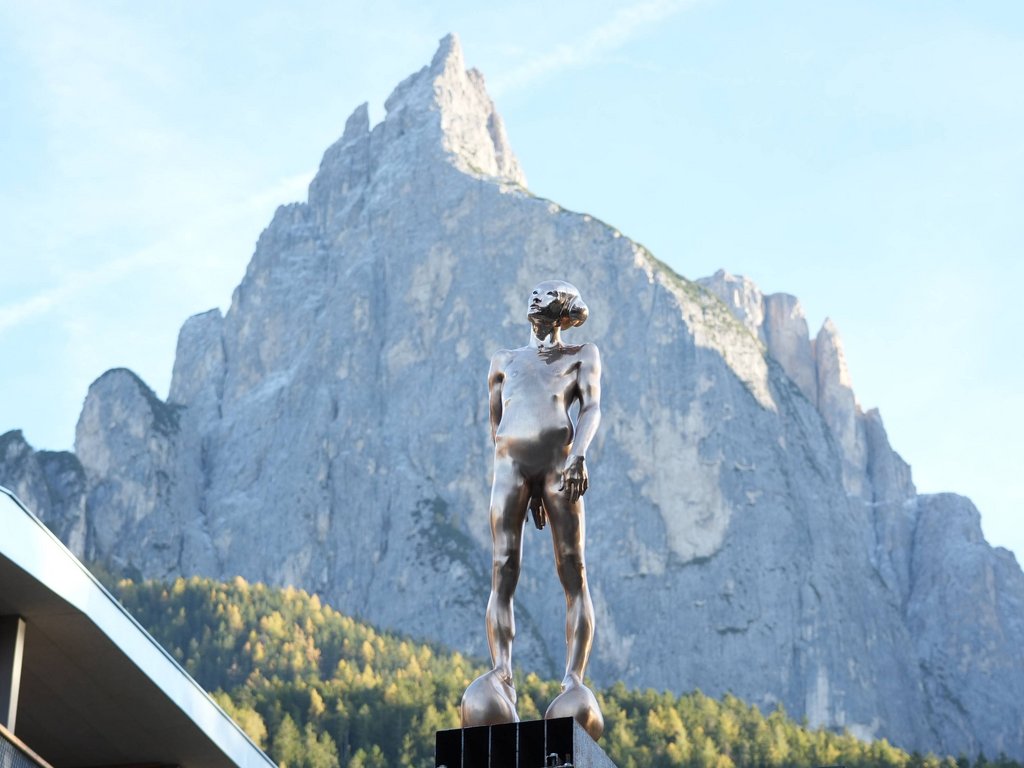
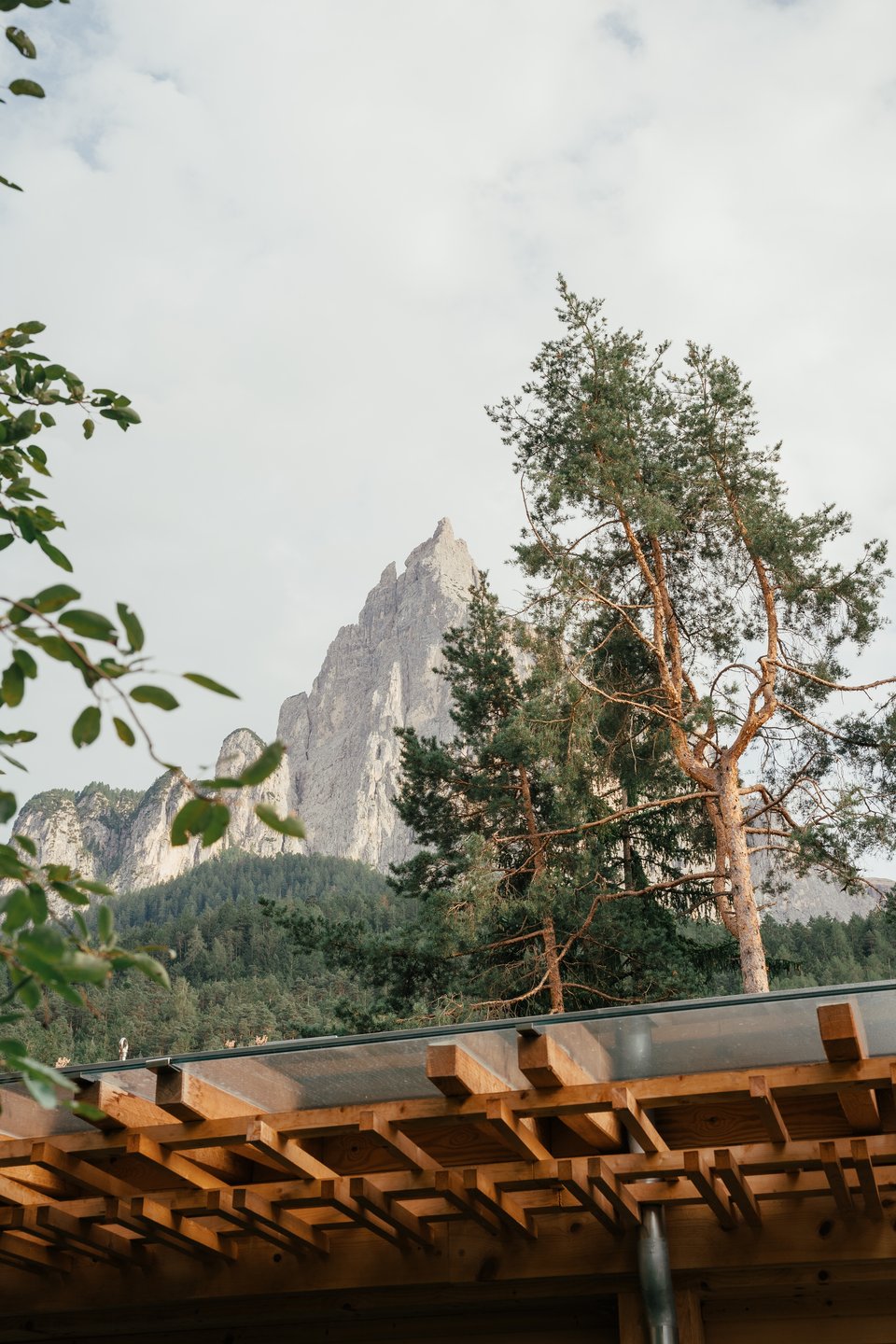
Embedded in the architectural clarity of the house and the stillness of the Dolomites, the Sensoria Art Edition brings together contemporary artistic positions that engage with space, material and perception.
It is not a static collection, but an evolving process — shaped by encounters, intuition and a deep sensitivity for atmosphere, people and place.
“When space, material and silence align, something deeper becomes visible.”
A Living Dialogue Between Space and Art
Art at Sensoria did not begin as a concept, but as a natural continuation of a way of thinking. Growing up in hospitality and shaped by international experience in design, aesthetics and luxury, Lea Oberhofer developed a deep intuition for spaces that do more than host — spaces that touch.
Sensoria was created as such a place. A place where architecture, nature, gastronomy and atmosphere come together to create a sense of calm, awareness and depth. Art became part of this vision over time — not as an addition, but as a natural extension of it. It reflects a belief in slowing down, in perception, and in meaningful encounters between people and their surroundings.

The Beginning
The artistic foundation of Sensoria is closely connected to a moment rooted in place.
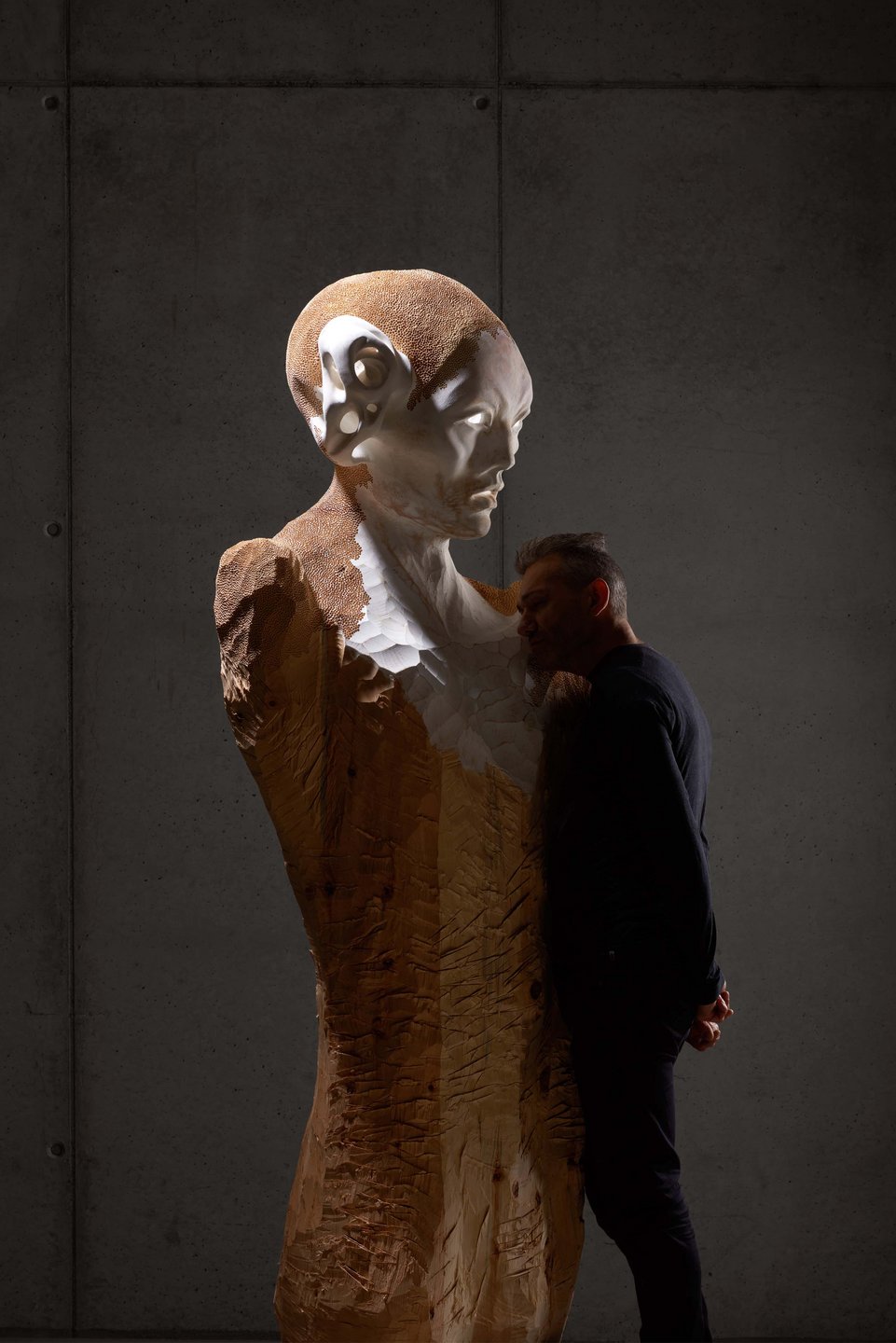
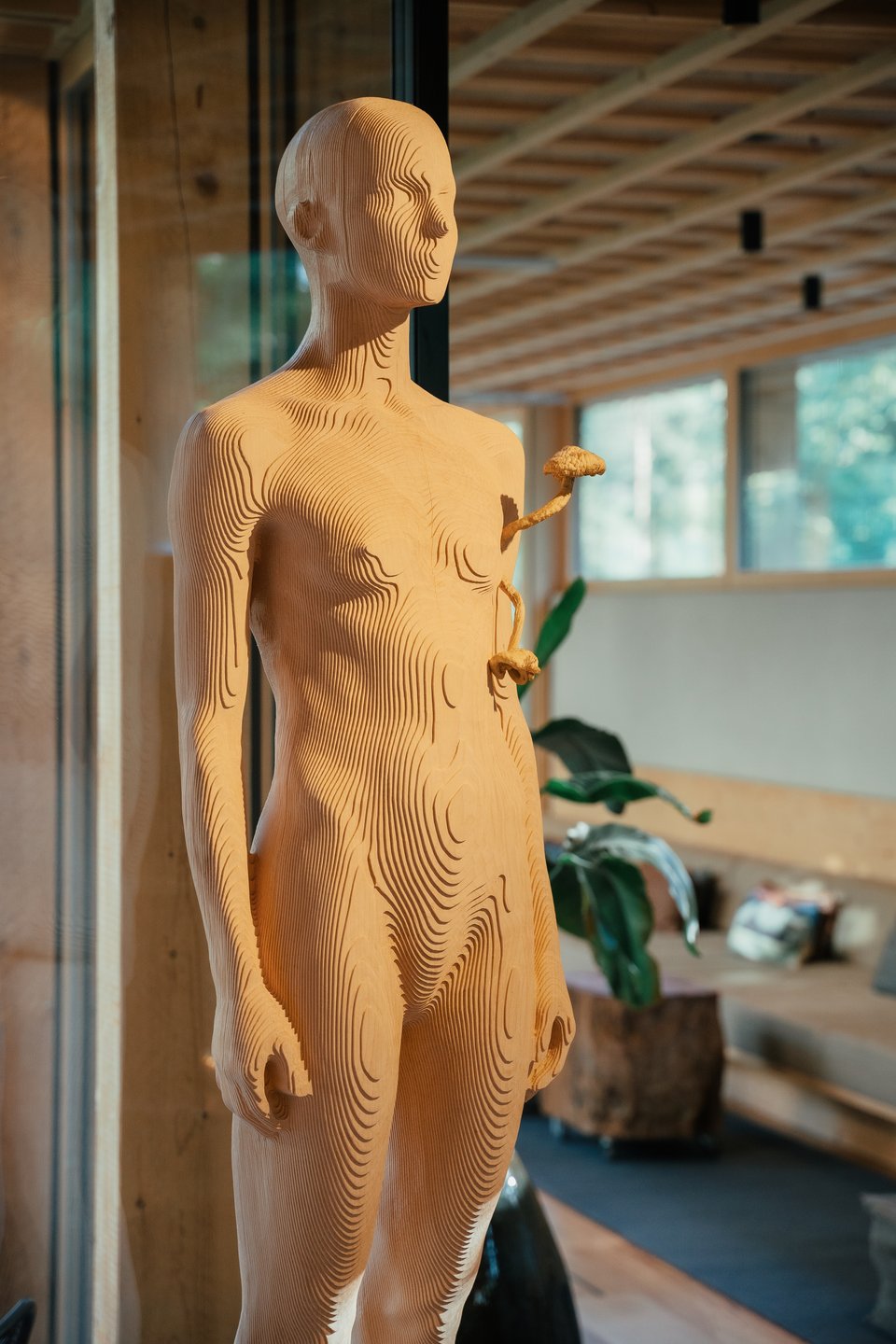
In 2024, on the occasion of the 50 year anniversary of the local nature park, art entered the village in a new and conscious way. Within this context, the first collaboration with Aron Demetz emerged — marking the beginning of a dialogue between nature, material and artistic expression. His work, deeply connected to wood, transformation and time, resonated naturally with both the surrounding landscape and the architectural language of Sensoria.
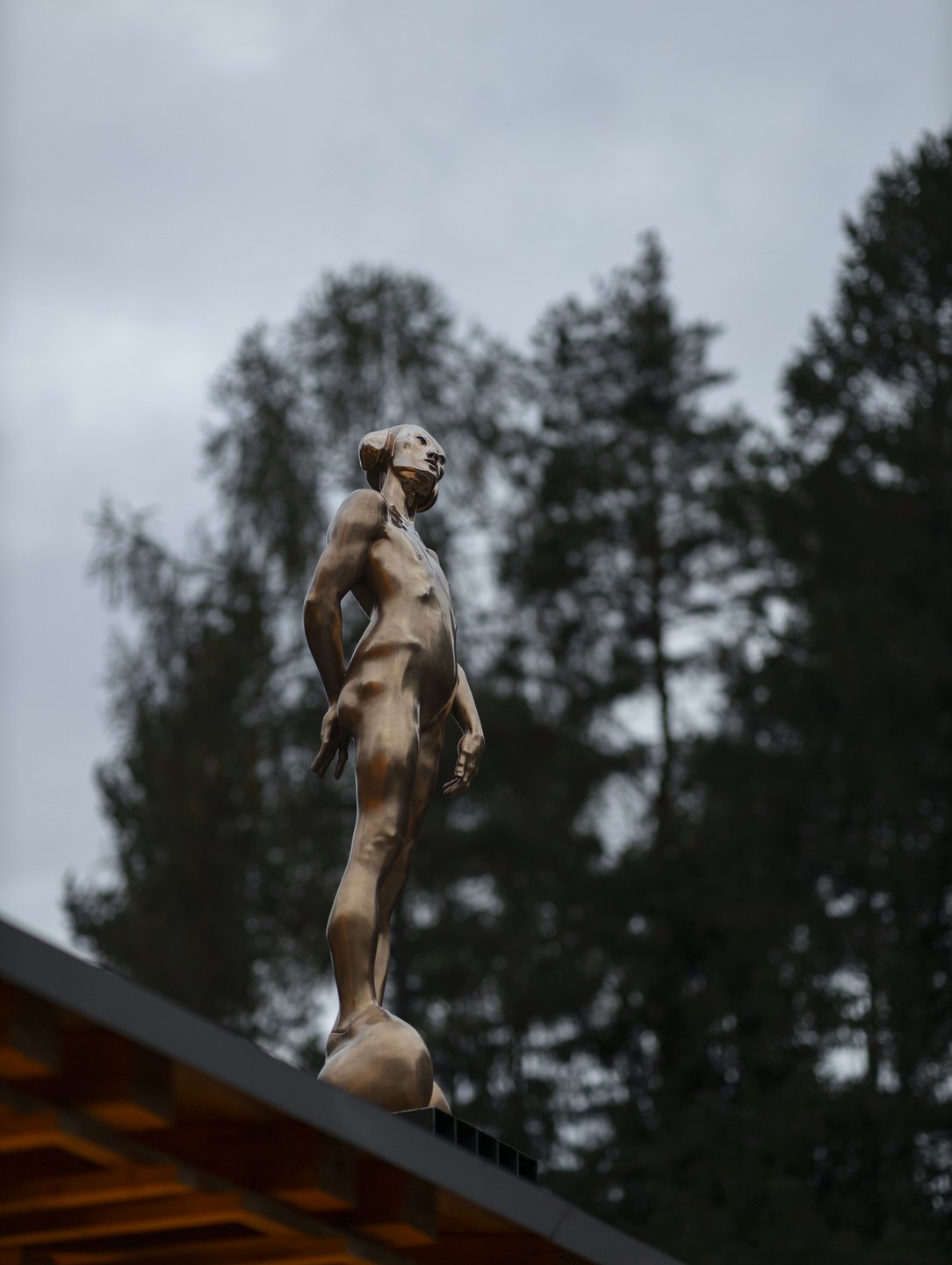
From this first encounter, a deeper exchange developed. Together with Aron Demetz, and later with Peter Senoner, this dialogue gradually evolved into what is now the Sensoria Art Edition. Both artists, internationally recognized and deeply rooted in Val Gardena, have given the house a distinct depth — not only in its visual presence, but in its attitude towards materiality, space and atmosphere.
Artists in Residence
The Sensoria Art Residency was born from a simple yet fundamental question:
How can contemporary art become more immediate, more accessible and more deeply experienced?
At Sensoria, we do not see art as something confined to galleries or museums. We are interested in the moment when an artwork begins to emerge — where observation, dialogue and lived experience come together.
The Sensoria Art Residency creates a space where artists, guests, architecture and landscape enter into a genuine dialogue. During their stay, selected artists live and work within the house. Their creative process becomes part of the place itself: open, visible and shaped through encounters with the people who experience it.
The residency places its focus not on the finished artwork, but on the development of an idea. Conversations, shared observations and unexpected encounters become as much a part of the artistic process as the work itself.
Every residency leaves a lasting trace. Through the Sensoria Art Edition, one artwork becomes part of an evolving, curated collection of contemporary artistic practices. Rather than a traditional art collection, it is conceived as a living archive of artistic encounters — where every work reflects a particular moment in time, a place and a dialogue that became part of Sensoria.
Become Part of the Sensoria Art Residency
Each year, the Sensoria Art Residency invites a small number of carefully selected contemporary artists to become part of a curated programme that brings together contemporary art, architecture, nature and meaningful encounters in the Dolomites.
Rather than seeking a particular style or discipline, we are interested in artistic practices that engage with a place through openness, sensitivity and curiosity. We welcome artists whose work opens new perspectives, invites reflection and creates a meaningful dialogue between art, landscape and the people who encounter it.
The residency offers time to observe, to create and to immerse oneself in the unique rhythm of Sensoria. More than a period of artistic production, it is an invitation to allow new ideas to emerge through presence, exchange and lived experience.
Every residency leaves a lasting trace. Through the Sensoria Art Edition, one artwork becomes part of an evolving curated collection and a living archive of artistic encounters. In this way, every artist contributes to the ongoing story of Sensoria, creating a connection that extends far beyond the residency itself.
Residencies | 2027 - Applications for 2027 are now open
Throughout the year, each residency is dedicated to a distinct artistic focus. Together, they form the different chapters of the Sensoria Art Residency, inviting artists to experience and interpret the spirit of the place from diverse perspectives.
Winter Edition
13 – 20 December 2026
Open to Contemporary Artistic Practices
The Winter Edition opens the residency programme with an interdisciplinary format for contemporary artists working across a wide range of practices. The quiet atmosphere of the snow-covered Dolomites, together with light, stillness and the rhythm of winter, provides the starting point for new artistic inquiries and creative processes.
Photography Residency
14 – 21 March 2027
Photography & Visual Storytelling
The Photography Residency welcomes photographers and visual artists with a distinctive artistic language and the openness to engage deeply with a place. At the heart of the residency is the development of a site-specific photographic project for the Sensoria Art Edition. Working in dialogue with the curatorial team, the selected artist will create a photographic work that becomes a permanent part of Sensoria, contributing to the evolving visual identity of the house. We are not looking for artists who simply document the Dolomites. We are looking for artists who allow the Dolomites to become part of their artistic thinking. We seek works that interpret rather than document, creating a contemporary dialogue between art, place and the people who encounter it.
Summer Art Residency
23 – 30 May 2027 or 6 – 13 June 2027
Contemporary Art
The Summer Art Residency is open to contemporary artists working across a broad range of disciplines, including painting, drawing, sculpture, installation, ceramics, textile art, mixed media and interdisciplinary practices. The residency places particular emphasis on artistic process, dialogue with our guests and the development of new work in response to the surrounding landscape, architecture and the unique rhythm of Sensoria. Each residency culminates in the creation of one artwork that becomes part of the Sensoria Art Edition, contributing a new chapter to the evolving story of the house.
Autumn Writing Residency
17 – 24 October 2027
Writing · Poetry · Literary Arts · Calligraphy
The Autumn Writing Residency is dedicated to the written word. We welcome writers, poets, calligraphers and artists whose practice explores language as a creative medium.
Inspired by the slower pace of autumn in the Dolomites, the residency offers space for reflection, observation and writing. Texts, poetic interventions and literary works become part of an ongoing dialogue between landscape, memory and personal experience.
Who Can Apply
We welcome applications from emerging and established contemporary artists from around the world.
More important than age, reputation or medium is a distinctive artistic practice, an authentic artistic voice and a genuine willingness to engage with a place, its atmosphere and the people who inhabit it.
How to Apply
Please submit your application in English as one single PDF document.
Your application should include:
- Letter of Interest (max. one page)
- Artist Statement
- Short Biography
- Curriculum Vitae (CV)
- Portfolio (maximum 15 selected works)
- Website and/or Instagram
- (Optional) Initial thoughts or a brief proposal for the residency
Please send your application to: Lea Oberhofer lea@sensoriadolomites.com
Following an initial curatorial review, shortlisted artists will be invited to an online conversation.
Final invitations to participate in the Sensoria Art Residency will be extended following the selection process.
Sensoria Art Residency: Soichiro Kanai
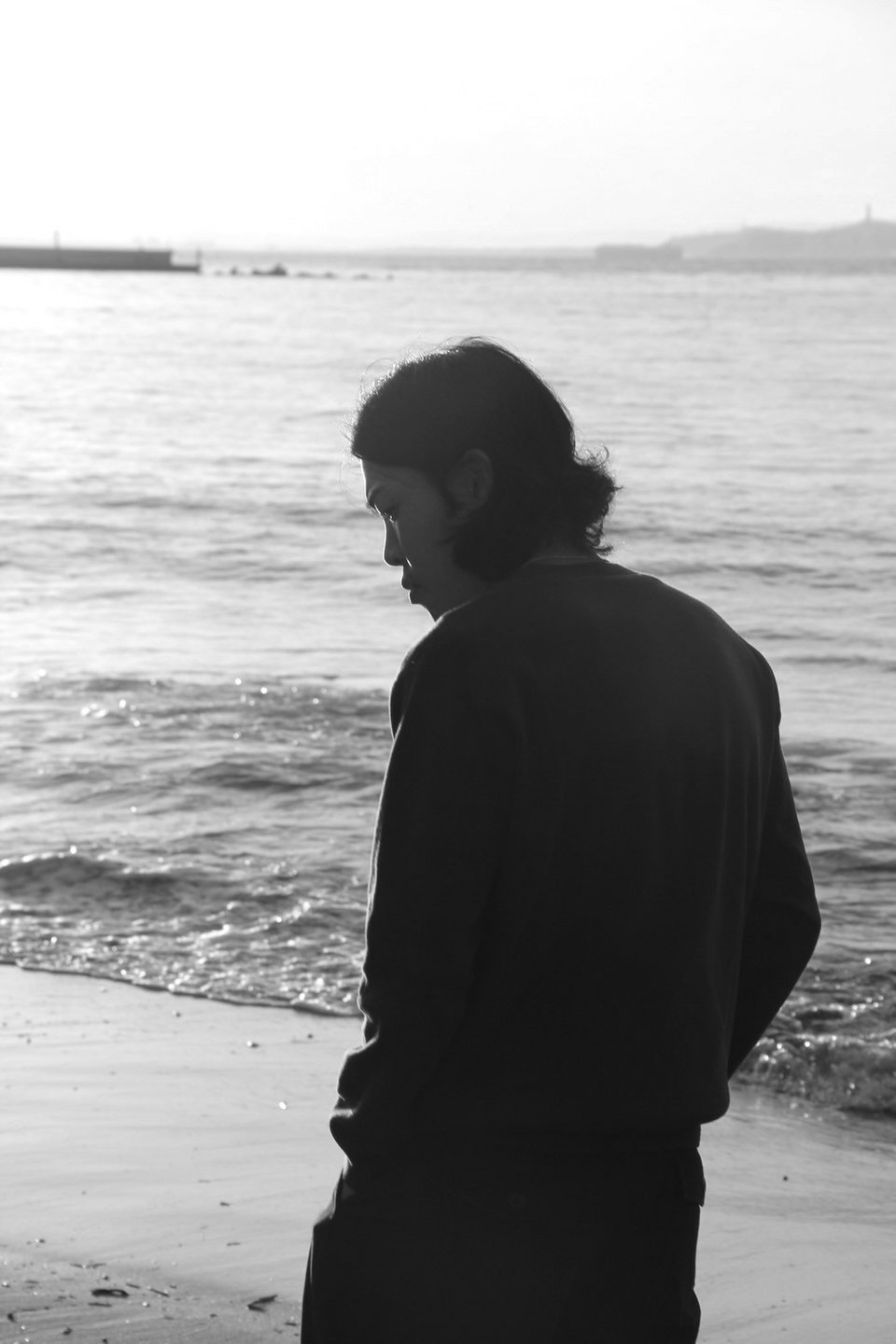
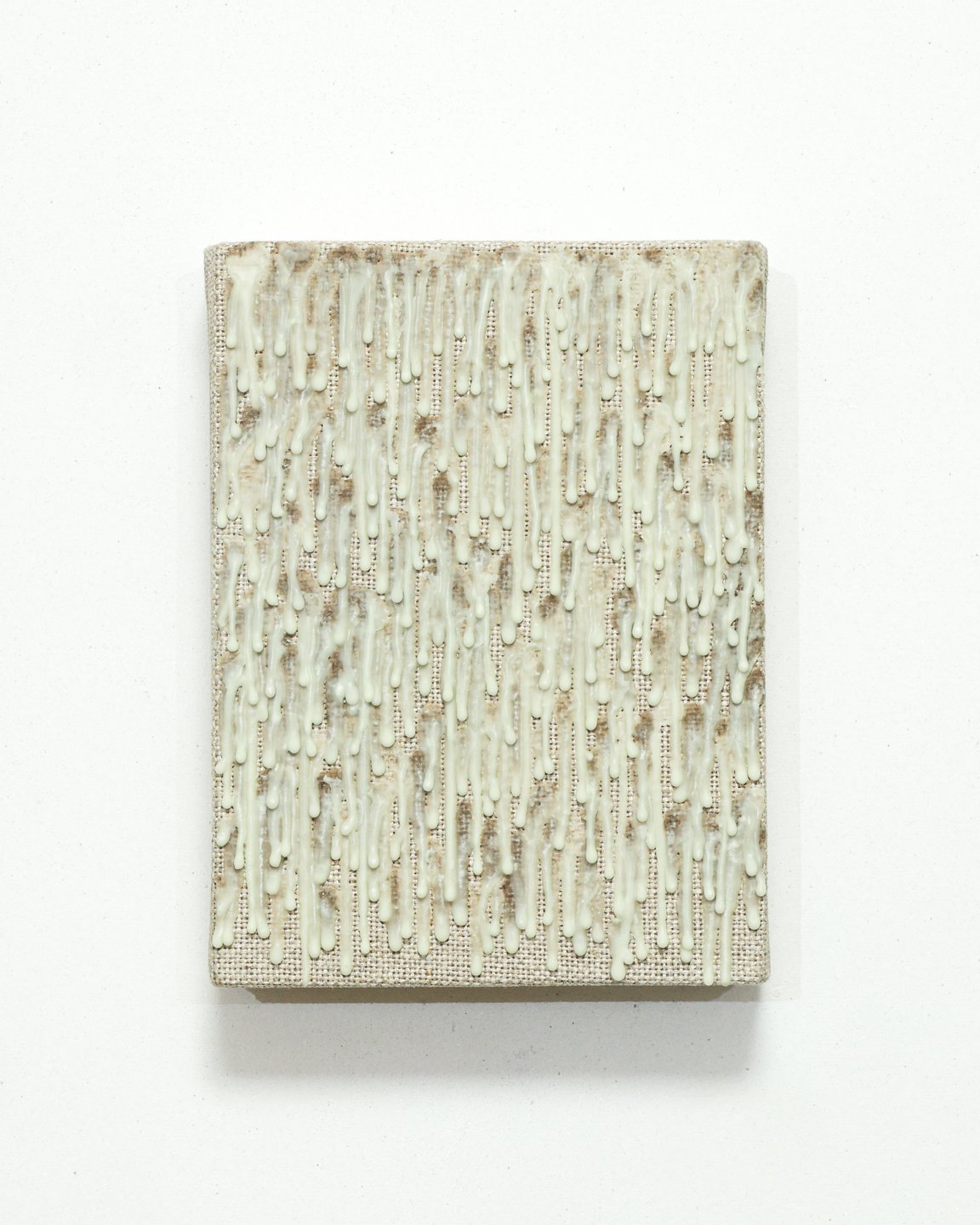
Soichiro Kanai is a Japanese contemporary artist whose work explores the relationship between time, material and space. Born in 1999 and based in Tokyo, his artistic path emerged through a deeply personal transformation. After an intensive period as a competitive tennis player which ultimately came to an abrupt end, he returned to drawing as a way of reconnecting with himself. This moment continues to shape his practice today.
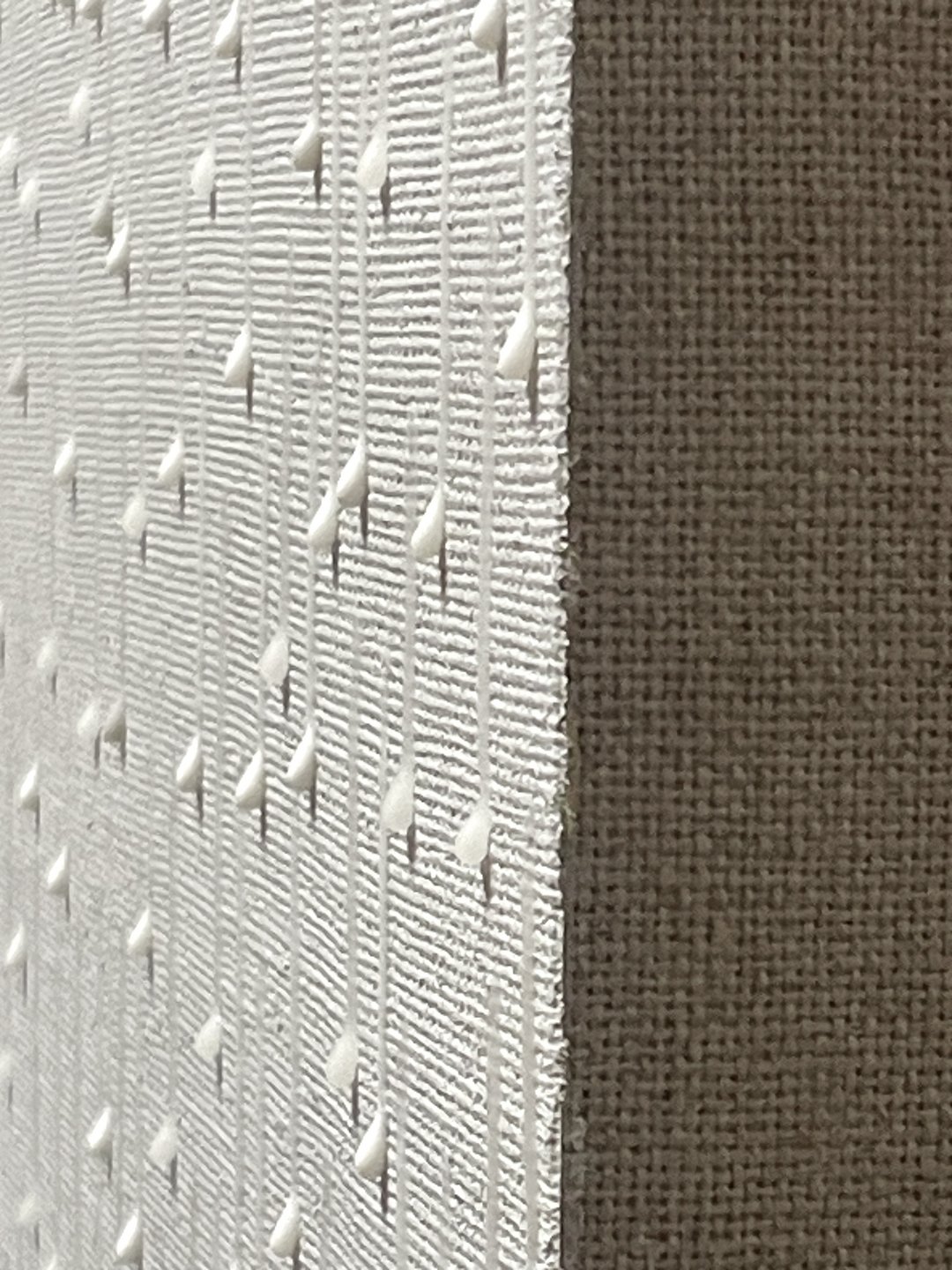
Working with beeswax, sumi ink, aged wood and soil, Kanai develops surfaces through repetitive gestures such as applying, pouring and layering. These processes are not directed towards perfection but towards an ongoing dialogue with the material itself. What defines his work is a quiet attentiveness. Through the repetition of touching, pausing and allowing, tension and stillness become embedded within the surface. Order does not arise from control but from a temporary balance that emerges where the behavior of the material meets the rhythm of the body.
His practice is deeply concerned with time, not as a linear concept but as something that accumulates, transforms and leaves traces. By working with organic and evolving materials, Kanai allows processes such as aging, erosion and change to become part of the work itself. In this way, his pieces move between opposites such as nature and human intervention, permanence and transience, presence and disappearance. They invite the viewer to reflect on the subtle boundaries between time, memory and space.
Recent exhibitions include Dialogue of Silence and Time (Seizan Gallery Tokyo, 2025), Upstairs (Moosey, UK, 2024), and Ooi (Crowd) (DDDART, 2023).
Sensoria Art Residency: Caroline Comploi
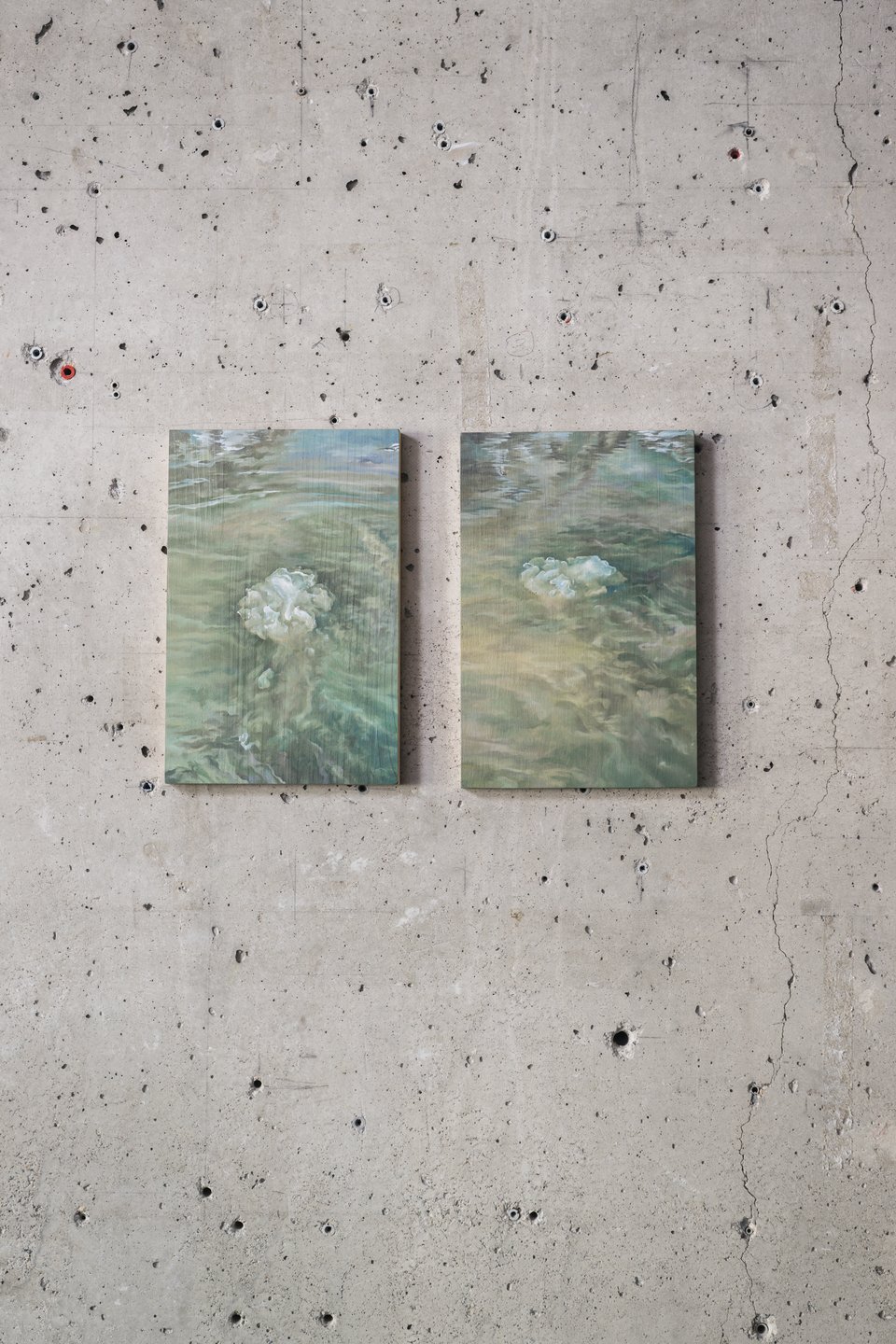
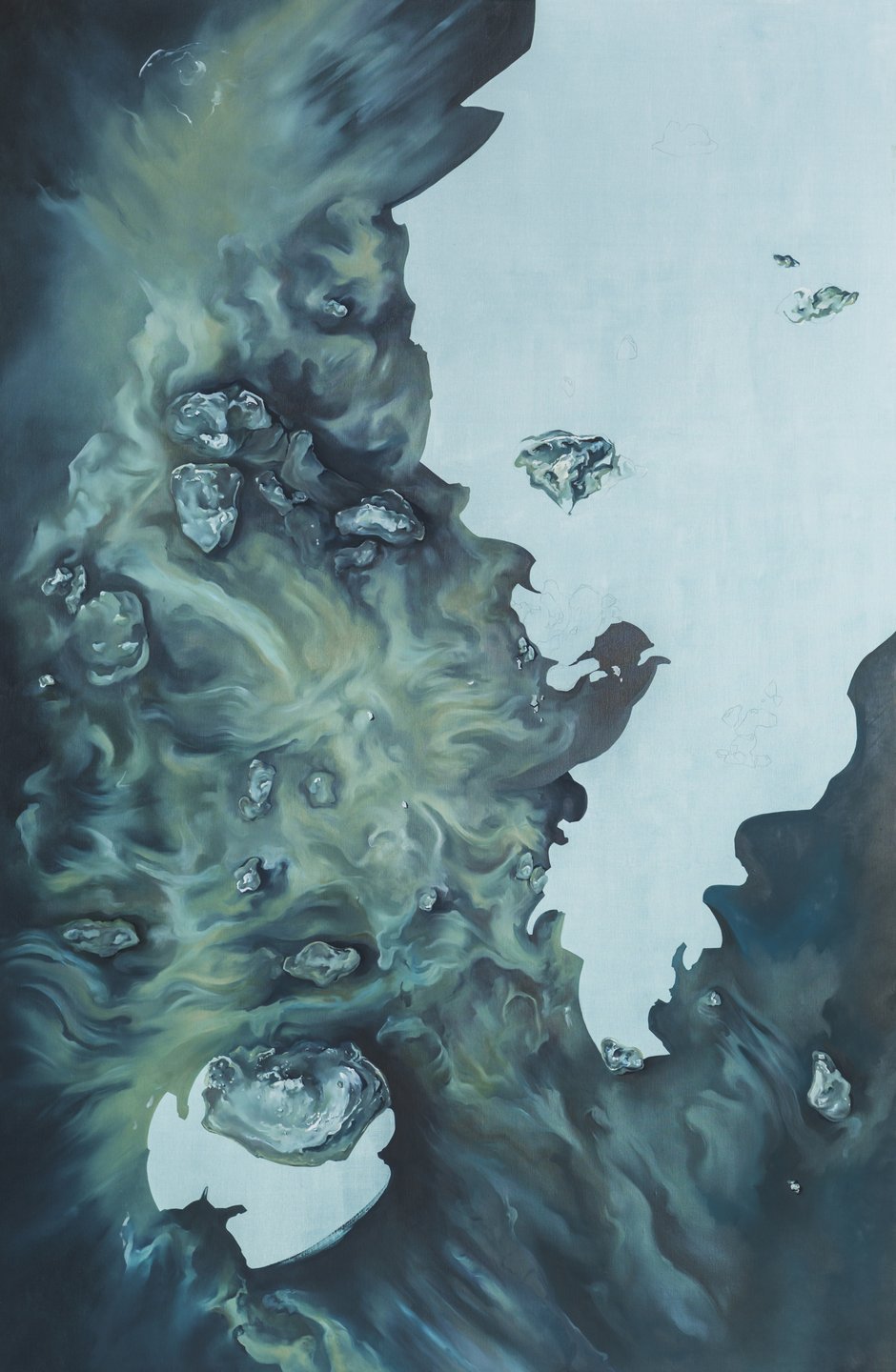
Caroline Comploi is a contemporary artist whose work unfolds at the intersection of landscape, memory and perception.
Born in 1999 in South Tyrol and raised in Val Gardena, her practice is closely connected to the Dolomites. It reflects a deep sensitivity towards nature, not as a backdrop, but as a living and interconnected system. Working primarily with oil paint and drawing, Comploi creates compositions that move between abstraction and landscape. Her works often evoke shifting terrains, where forms dissolve into one another and boundaries remain intentionally open. Rather than depicting nature, she approaches it as something to be felt and translated. Light, movement and subtle transformation become central elements, allowing her paintings to capture fleeting states rather than fixed images.
Her artistic language is shaped by her Ladin cultural background as well as a broader reflection on ways of seeing in which humans, animals and environment are understood as part of a continuous whole. This perspective lends her work a quiet depth. It moves between observation and intuition, between outer landscape and inner image. In her paintings, time is not linear. Surfaces seem to emerge, shift and settle, inviting the viewer to slow down and engage more attentively with what unfolds. She studied painting at the Academy of Fine Arts in Venice, where she completed both her bachelor and master degrees, further refining her visual language within a contemporary context.
Caroline Comploi lives and works in Val Gardena, where her practice continues to evolve in close dialogue with landscape, material and place.
Art Experiences
Art at Sensoria can also be experienced directly. Through a series of curated formats, guests are invited to explore their own creative expression — guided by artists, materials and traditional techniques. These experiences include atelier visits, artist for a day, drawing sessions, pottery classes and craft based formats such as wreath binding, as well as Suminagashi, the Japanese art of marbling. Each format is an invitation to slow down, to engage with material, and to reconnect with the act of making. It is not about learning, but about experiencing.
Sensoria Art Christmas Charity
The Sensoria Art Christmas Charity extends the artistic dialogue into the winter season. In an intimate and carefully curated setting, selected artists present a work that is auctioned as part of a shared evening. The artist defines the starting price, which is fully attributed to them. Any additional proceeds are dedicated to a charitable cause. In this way, the initiative connects artistic creation with social responsibility — transforming the act of collecting into an act of giving. Set within the quiet atmosphere of the festive season, the evening becomes more than an auction.
It becomes a moment of connection between art, people and purpose.
Art Dinner
Art at Sensoria becomes experience. An Art Dinner with added inspiration. Cuisine meets art, artists meet guests, and conversations meet new perspectives.
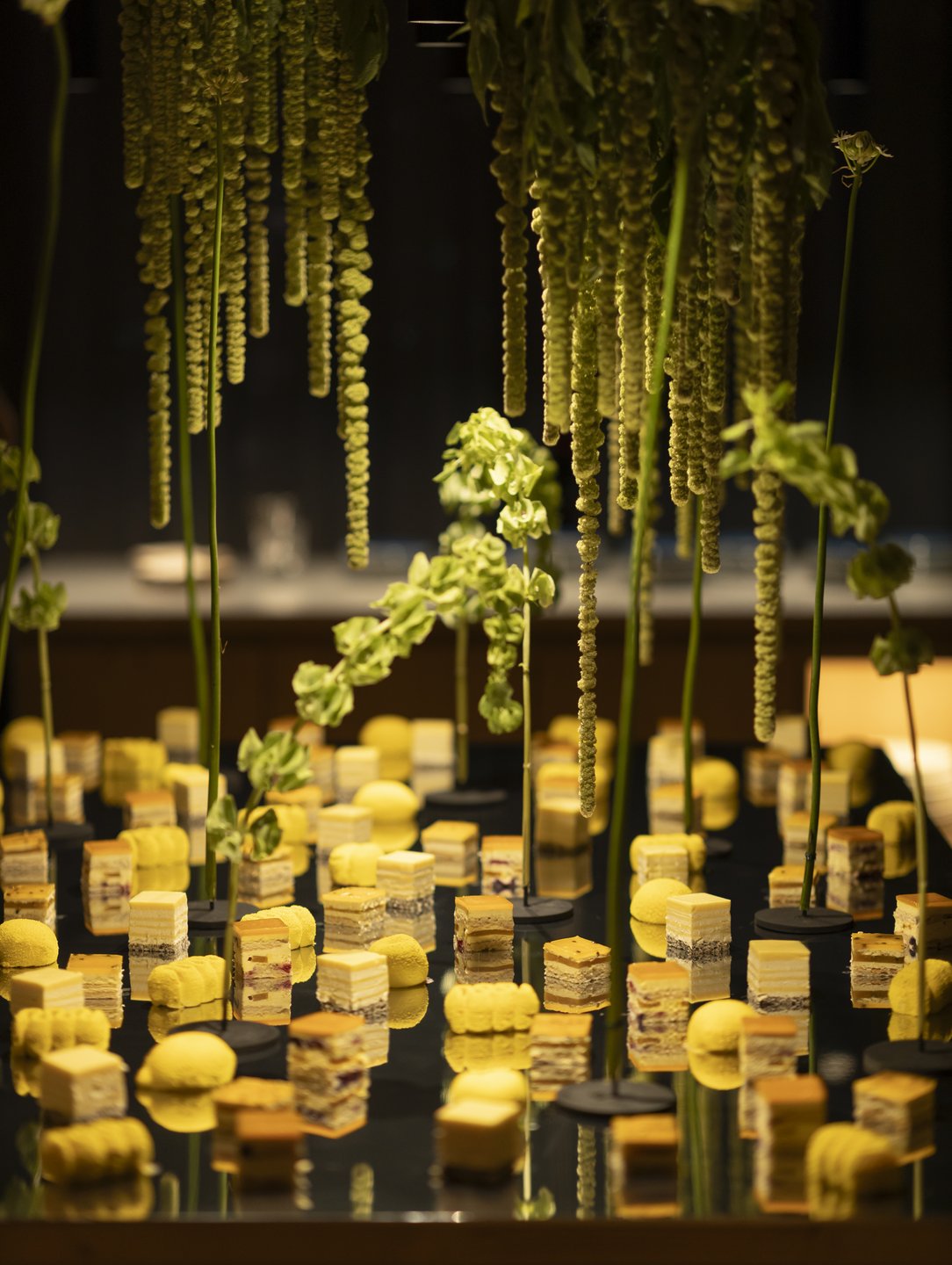
During selected evenings, artistic practice enters into dialogue with culinary expression. Artists are present, conversations unfold, and guests experience the work in an intimate and sensory setting. A central element of these evenings is the interplay between food and artistic installation. Inspired by the philosophy of Ikebana, food and floral compositions are conceived as one — creating a subtle dialogue between nature, form and perception. These evenings go beyond a traditional dinner. They create immersive moments where art, gastronomy and atmosphere merge into a shared experience.
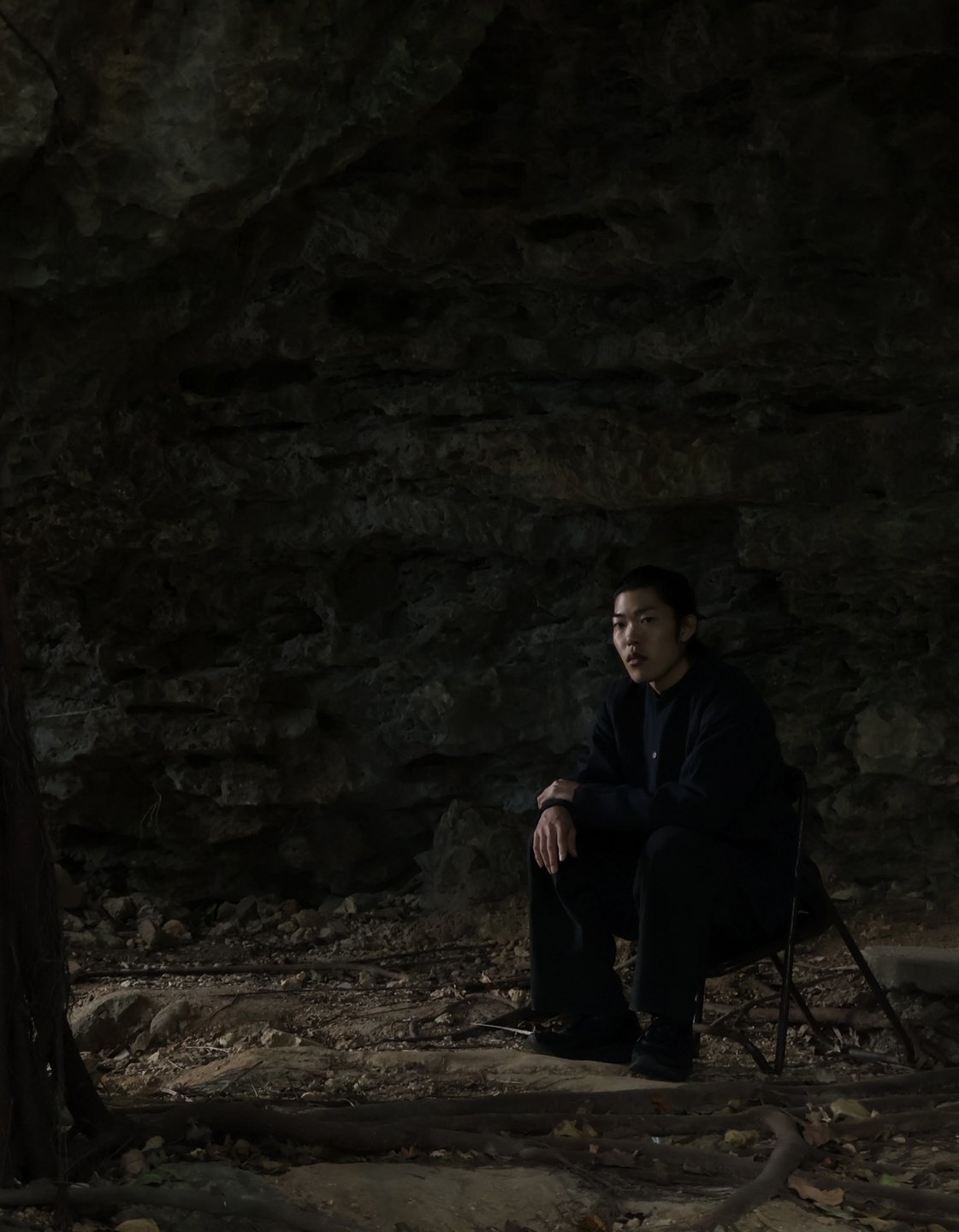
Soichiro Kanai
is a Japanese contemporary artist whose work explores the relationship between time, material and space.
Working with beeswax, sumi ink, wood and soil, he develops surfaces through repetition and quiet attentiveness. His practice unfolds as a dialogue with material, where tension and stillness emerge through process rather than control. His works reflect time as transformation — moving between permanence and transience, presence and disappearance.
In summer 2026, we welcome Soichiro Kanai from May 31 to June 11 at Sensoria Dolomites.
Caroline Comploi
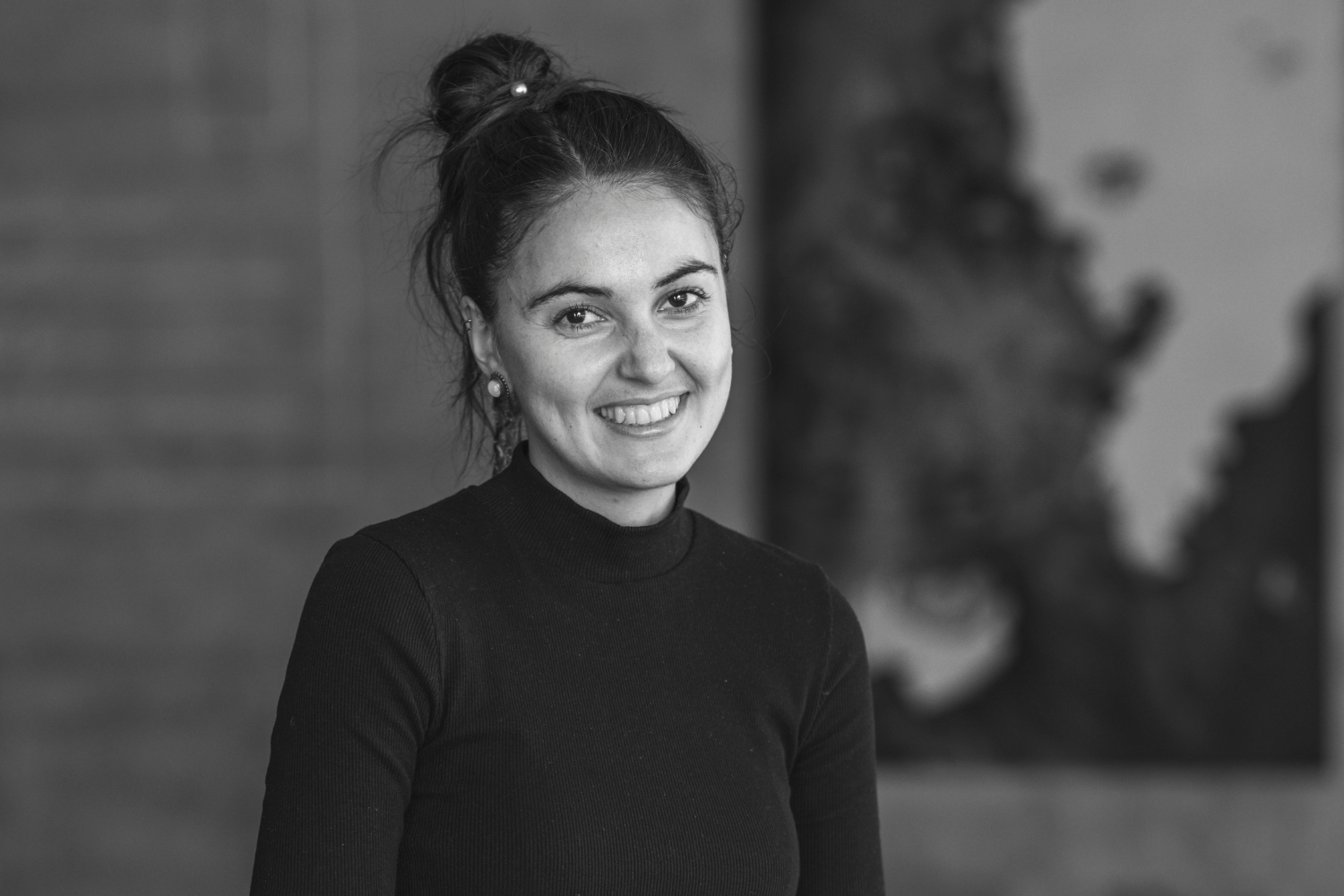
is a contemporary artist whose work unfolds at the intersection of landscape, memory and perception.
Rooted in the Dolomites, her paintings move between abstraction and landscape, translating nature into shifting, atmospheric compositions. Light, movement and transformation become central elements. Her work reflects a continuous dialogue between inner and outer worlds, inviting a slower and more attentive way of seeing.
Caroline Comploi will be in residence from August 23 to 30.
The Sensoria Art Edition
is not a fixed concept.
It unfolds quietly over time, shaped by encounters, shared experiences and the ongoing dialogue between art, space and people.
It reflects an understanding of hospitality that goes beyond the visible, an interplay of perception, atmosphere and connection in which something can emerge that touches, inspires and lingers.
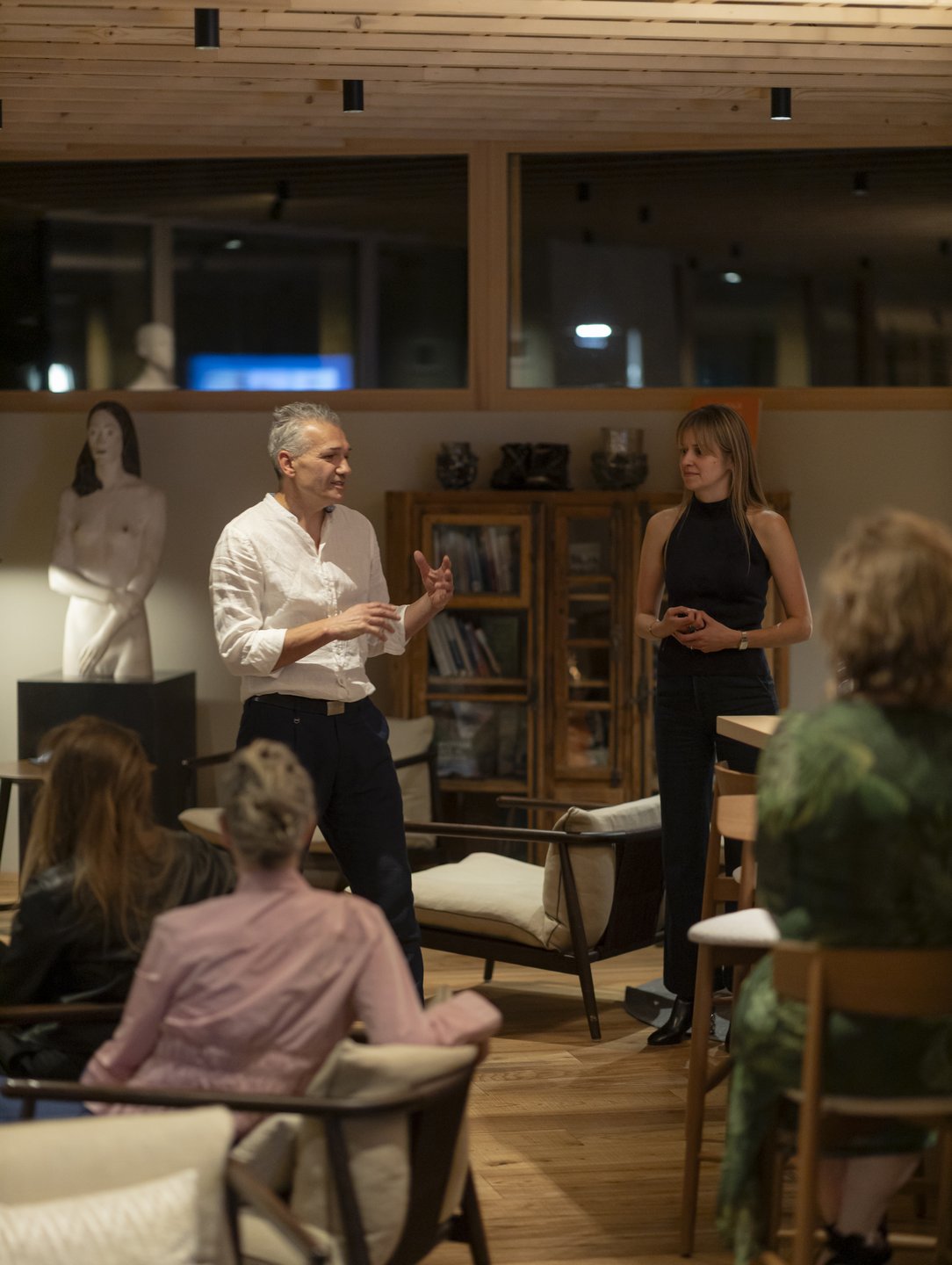
Atmospheric evenings where art and music come together in sensory harmony and create special moments.
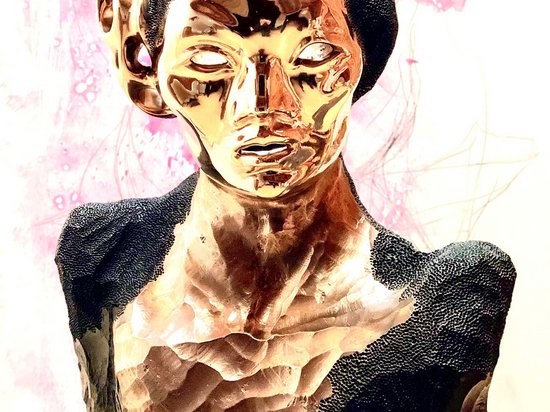
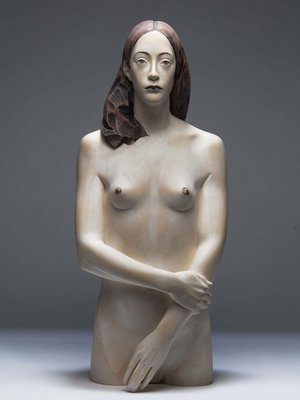
On curated tours through the hotel, you’ll discover the works the different artists, accompanied by insights into their thoughts and feelings.
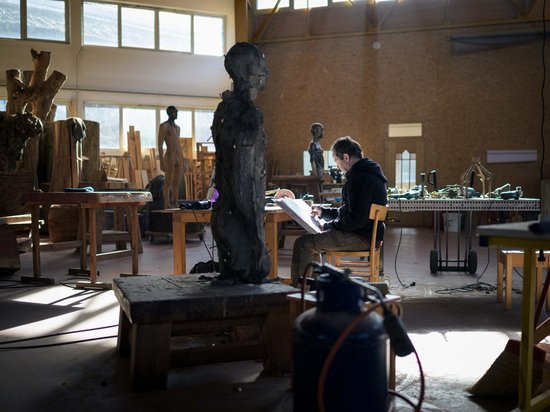
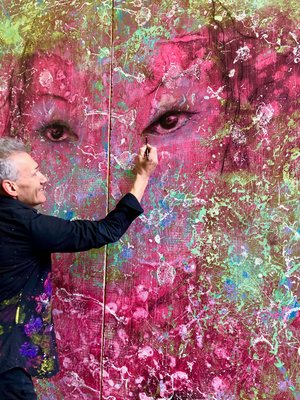
Personal encounters with artists, a direct insight into their creative processes – up close, authentic, moving.
Bookable on request
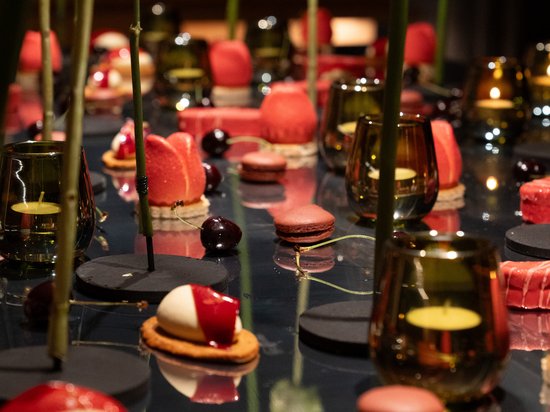
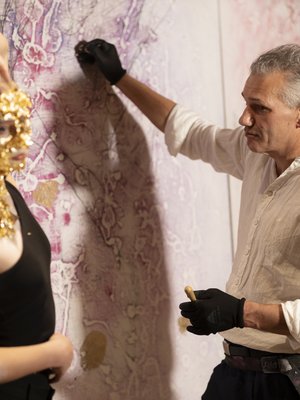
Exclusive culinary experiences as a multidisciplinary composition. Art and cuisine meet in a quiet dialogue, creating intimate, sensory moments.
Inspired by Ikebana, food and floral elements merge into a refined interplay of nature, form and perception.
It is a place to become aware.
Materiality and Metamorphosis
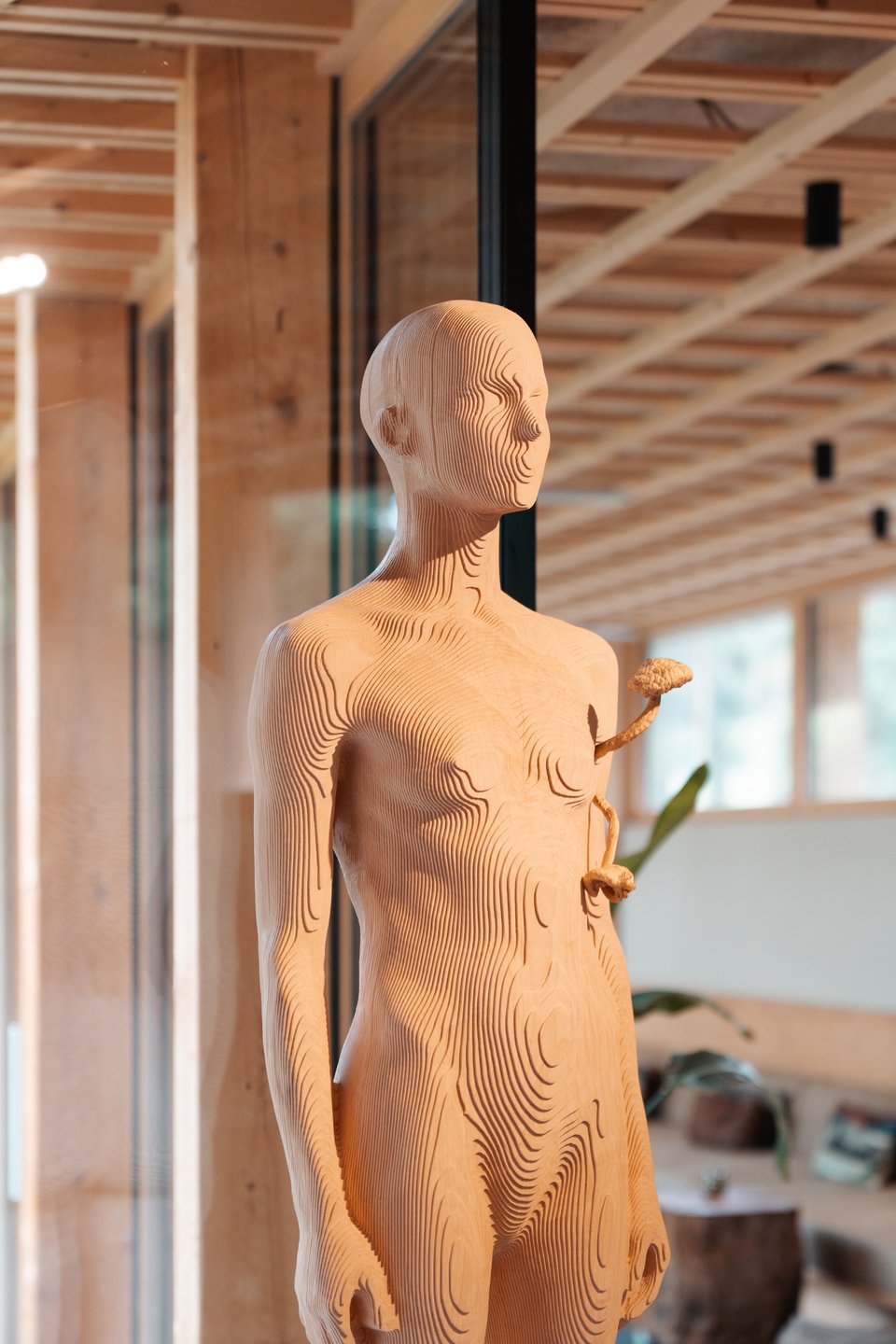
The foundation of the Sensoria Art was shaped by two artists whose work opened a dialogue between sculpture, space and perception: Aron Demetz and Peter Senoner.
In contemporary sculpture, Aron Demetz and Peter Senoner offer two distinct yet complementary perspectives on the human figure and its transformation within a field shaped by nature, technology and identity. Rooted in the rich sculptural tradition of South Tyrol, both artists move beyond the boundaries of classical craftsmanship, expanding it into a contemporary language that opens new narrative and aesthetic dimensions.
Aron Demetz – transformation and transience
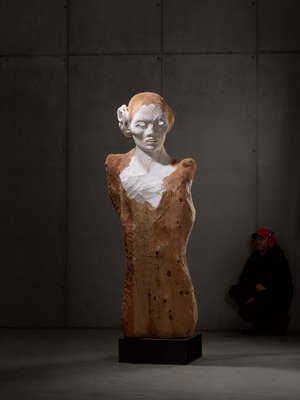
Aron Demetz (born in 1972 in Sterzing, South Tyrol) is one of the most distinctive voices in contemporary sculpture. Now at home in Ortisei in Val Gardena/Gröden, he draws on a profound knowledge of traditional woodcarving while embracing an experimental approach to material and form. Following his training at the art school in Selva, he studied sculpture under Professor Christian Höpfner at the Academy of Fine Arts in Nuremberg.
Demetz is not concerned with form alone, but also with transformation – in both physical and conceptual terms. His figures become vessels for exploring questions of vulnerability, time, and the human impact on natural processes. His works bring organic materials such as wood into dialogue with resin, plaster, or bronze, shaped in turn by burning, oxidation, or fungal growth – natural processes that Demetz chooses not to control, but to guide. In this way, the creative process itself becomes part of the work’s essence.
His international breakthrough came in 2009 with his participation in the 53rd Venice Biennale. Today, his sculptures can be found in renowned museums and collections, such as the Arp Museum Bahnhof Rolandseck, the Museo Omero in Ancona, and the Beelden aan Zee in The Hague. Alongside his artistic work, he was formerly a professor of sculpture at the academies in Carrara and Venice and has been the director of the Summeracademy Gardena in Ortisei since 2018.
Peter Senoner – hybridity and digital imagination
Peter Senoner (born in 1970 in Bolzano, South Tyrol) has developed artistic expression in the place where the body, technology, and digital imagination intersect. Now based in Klausen, he studied at the Academy of Fine Arts in Munich under Professor Asta Gröting. Numerous international studio residencies – including in New York, Tokyo, Vienna, Berlin, and Detroit – have shaped his global outlook and aesthetic language.
Senoner creates sculptures and drawings that explore post-human corporealities. His hybrid figures – part human, part machine, part beings from an as-yet-unknown cosmos – pose questions about identity, gender, reproduction, and memory, combining traditional materials such as wood and bronze with digital techniques like 3D scanning and CNC milling. The resulting forms are both alien and familiar – unsettling, captivating, and intellectually provocative.
Exhibitions in institutions such as the Kunsthalle in Vienna, the Tyrolean State Museum Ferdinandeum, the Lentos Art Museum in Linz, and the Haus der Kunst in Munich attest to the relevance of his work. As an educator, he has worked at universities in Tokyo, Innsbruck, Rosenheim, and Bolzano, where he continues to shape the discourse on the future of the body and spatial experience.